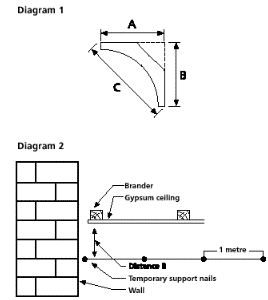
A x B x C x D (D=LENGTH) (refer Diagram 1.)
Rhino Art = 83 mm x 83 mm x 120 mm 75mm Cove = 60 mm x 60 mm x 82 mm 125mm
Cove = 90 mm x 90 mm x 120 mm Gypsum Mouldings as per catalogue
1. Measure distance (B) down from the ceiling and mark it on several places
on the wall. Shoot a chalk line along these marks on the wall. Insert
temporary nails at 1 metre intervals just below the chalk line. (Refer
Diagram 2.)
2. Fix a timber stop along the base of the mitre box distance (A) from the vertical side. Place the Gypsum moulding upside down (i.e. the bottom facing upwards) in the mitre box. (Refer Diagram 3.) Refer to our catalogue to ensure that you have the pattern the correct way up.

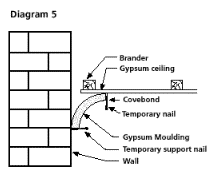
4. Lay the Gypsum moulding face down over a length of timber. Butter both edges with Rhino Art Adhesive / Rhinobed / Covebond to more or less the thickness of a finger. (Refer Diagram 4.)
NB: Always carry cornice on edge.
Note: Cornices are purely decorative and do not con-tribute in anyway to the structural performance of a building. If excess movement of the roof is expected, fix cornice to the wall only. Fill gaps with a flexible paintable sealant. Plascon Polycell Gap Filler can be used or where there is aggressive movement, Plascon Polymastic would suffice.
- Fixing of cove with steel brandering behind the board could be done either by; i) Glue the cove to the wall and the ceiling with Rhinobed or Covebond with support nails under the cove until the bond between cove and wall and ceiling has formed. Where excessive movement is expected glue to the wall only and fill the gap at the ceiling with a paintable flexible sealant. ii) Screw the cove to the ceiling into the steel brander using a screw gun and a screw of suitable length (41mm). Nail the cove to the wall where required. Fill holes with Rhinoglide and sand when dry.